The Yellow Brick Road: Why Your New Turf is Dying on Rubble
Is your new lawn turning yellow and dying in the summer heat? Discover why laying turf over buried builder's rubble cooks the roots, and how proper excavation saves it.
I see it every summer. People drop thousands on fresh turf in May. Fast forward to August and the whole lot is completely fried. It's just patches of yellow straw, and the dirt underneath is baked rock-hard.
First thing the client says is they must have left the sprinkler off. That isn't the problem.
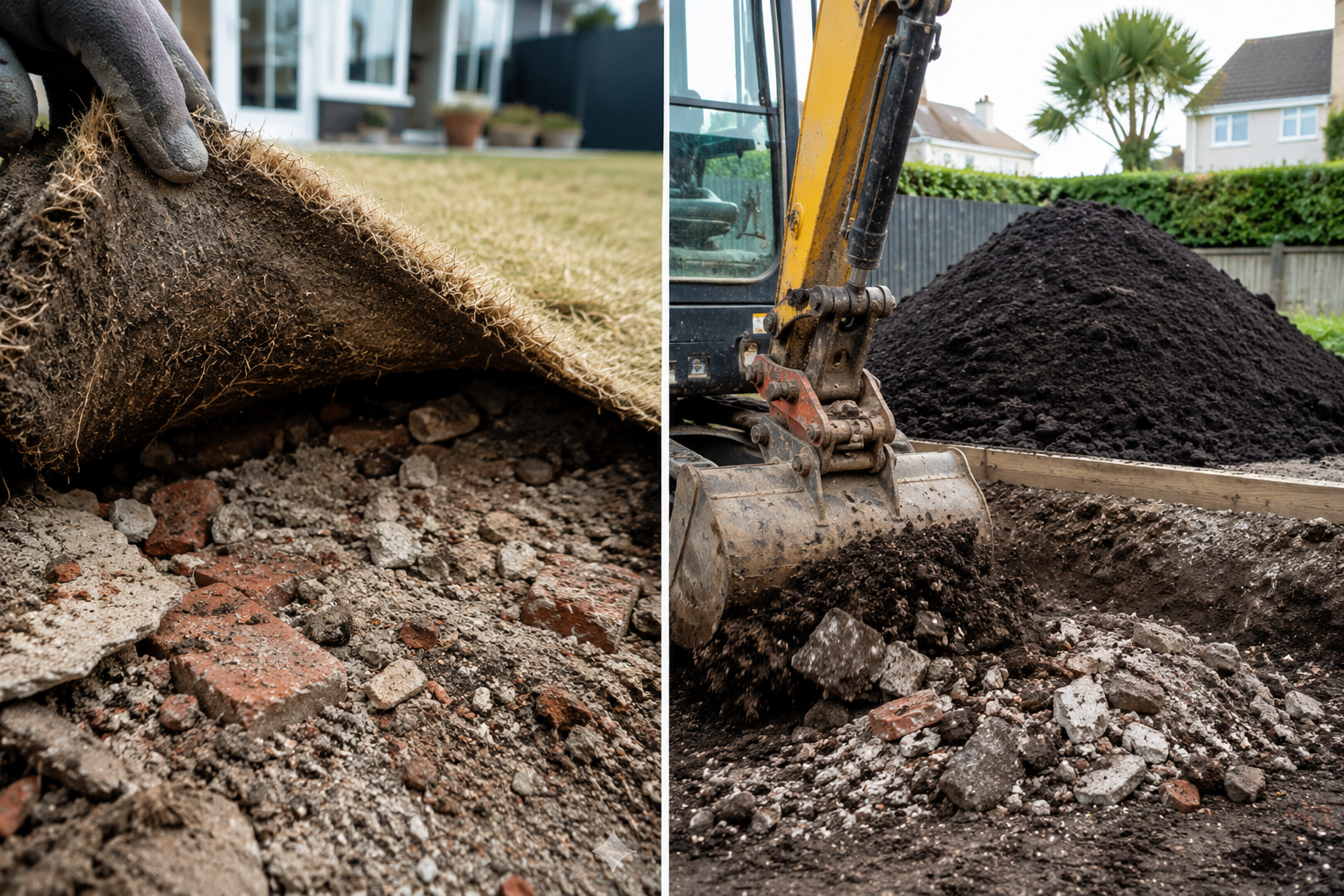
The problem is what the cowboy builder left buried two inches right under the grass.
The Rubble Trap
Putting down a new lawn isn't just about unrolling turf. It's about what is underneath it.
Cheap landscapers absolutely hate groundworks. It takes time and skip hire to dig out an old garden. Instead of ripping out the old broken patio, crushed bricks, and compacted clay, they take a massive shortcut. They throw a tiny one-inch layer of cheap dirt straight over the top of the builder's rubble, rake it flat, and drop the turf right on it.
It looks brilliant for about four weeks.
The Summer Bake
That shortcut guarantees dead grass.
When you are laying new turf in Dorset, those grass roots need to drive deep into the earth to find moisture. If there is a solid layer of crushed brick sitting just below the surface, the roots hit a physical wall and stop.
August hits. The sun heats those buried bricks up like an oven. The roots get trapped between the baking sun above and the hot rubble below. The grass literally cooks from the bottom up. No amount of expensive yellow grass repair treatments or sprinkler systems will save it.
Diggers and Graded Soil
We do not mess around with garden soil preparation. We don't lay a single roll of grass until the diggers have been through.
We track the machine in and physically scrape all the old rubbish out. Every buried brick, bit of concrete, and chunk of hard clay gets chucked straight in a skip. Once the site is stripped entirely bare, we deep rotovate the ground to break up the hardpan clay.
Then, we bring in a minimum of 150mm of clean, screened earth for proper topsoil grading across our Bournemouth jobs. It gives the turf massive, deep, nutrient-rich earth to anchor its roots into. That is the only way to do landscaping groundworks that actually survive the summer heat.
Stop wasting money on lawns that die in a month.
Pop down and see the lads at 78 Alma Rd, Bournemouth BH9 1AN, UK, or ring the site phone on 07835 390845. We’ll show you what a proper dig-out looks like.